Votern
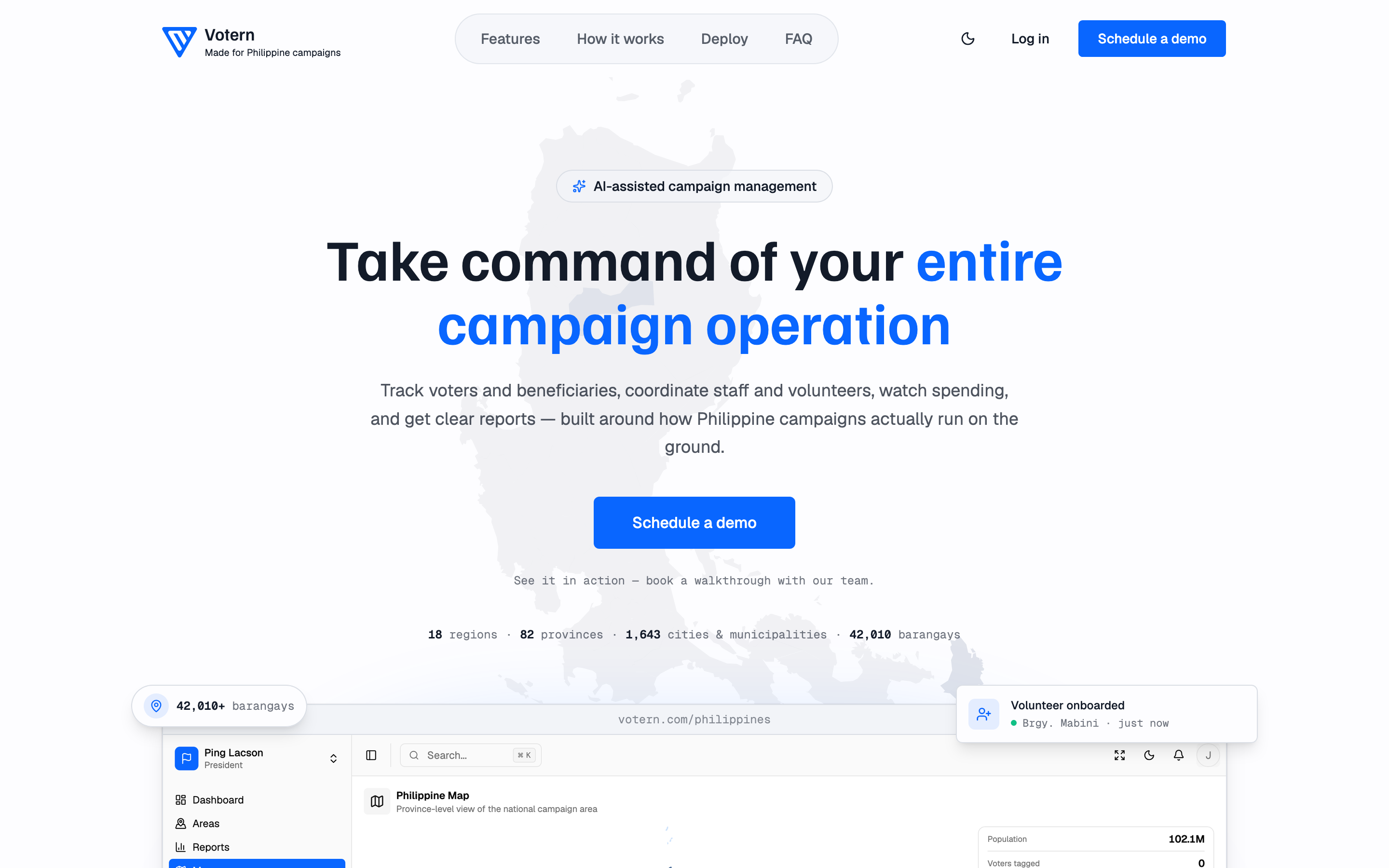
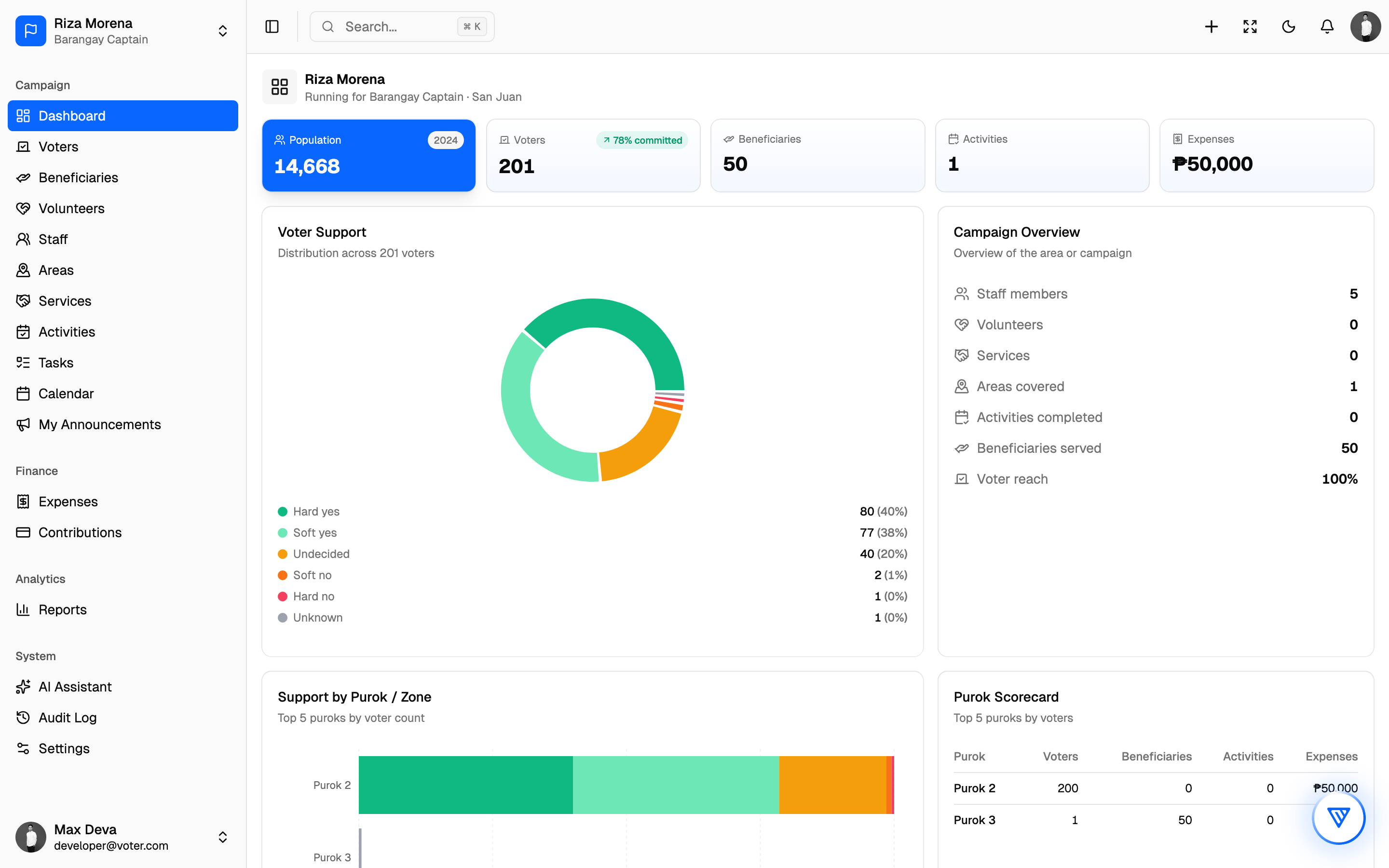
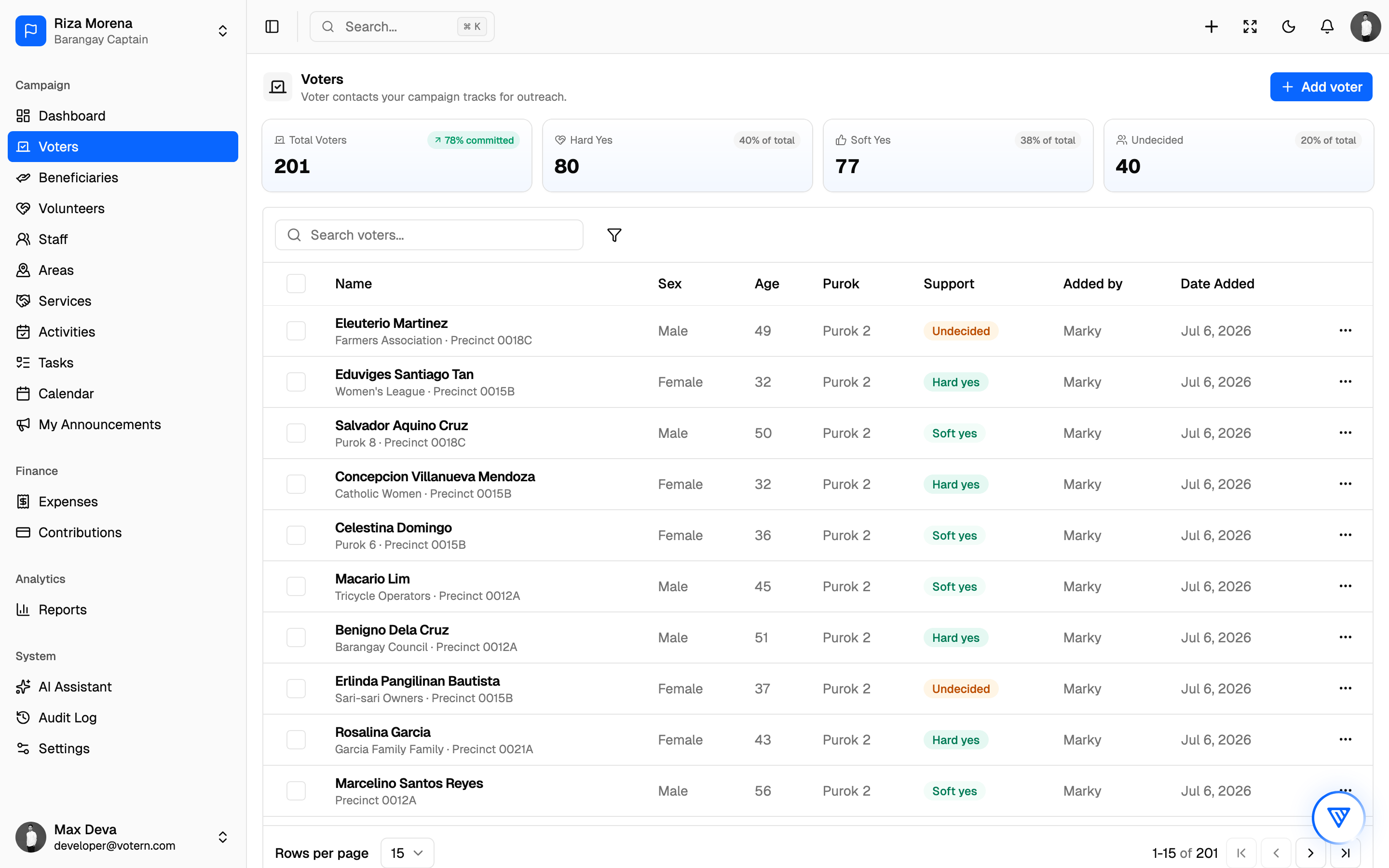
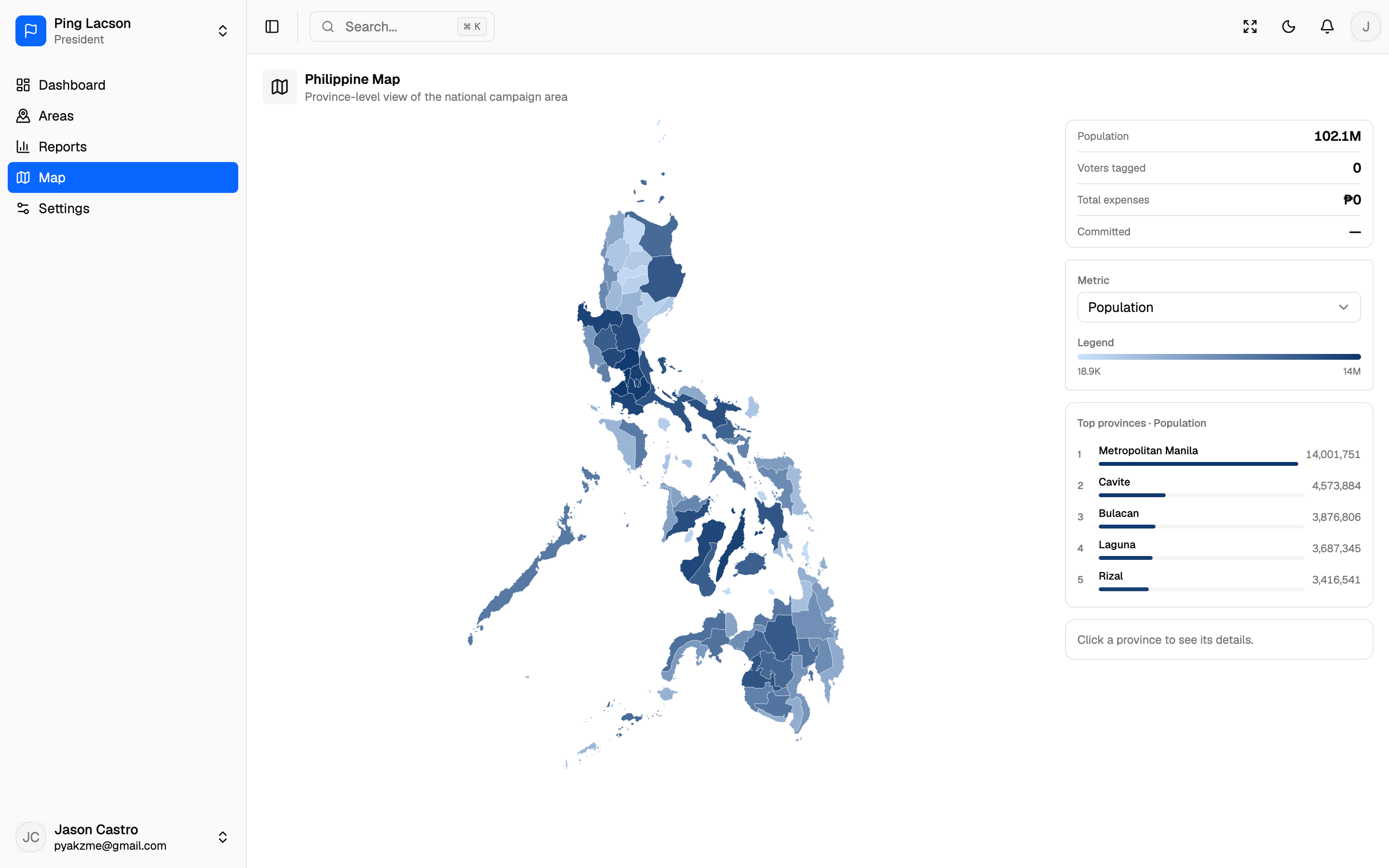
Track voters and beneficiaries, coordinate staff and volunteers, watch spending, and get clear reports — built around how Philippine campaigns actually run on the ground.
 Tanstack Start & AI
 DeepSeek API
 Better Auth
 Resend
 Postgres
 Redis
Redis
 BullMQ
 Dokploy
 Digital Ocean
 Cloudflare
Key Features
- •Voter and beneficiary tracking with custom tagging and search
- •Staff and volunteer coordination with task and territory assignments
- •Real-time campaign spending and budget tracking
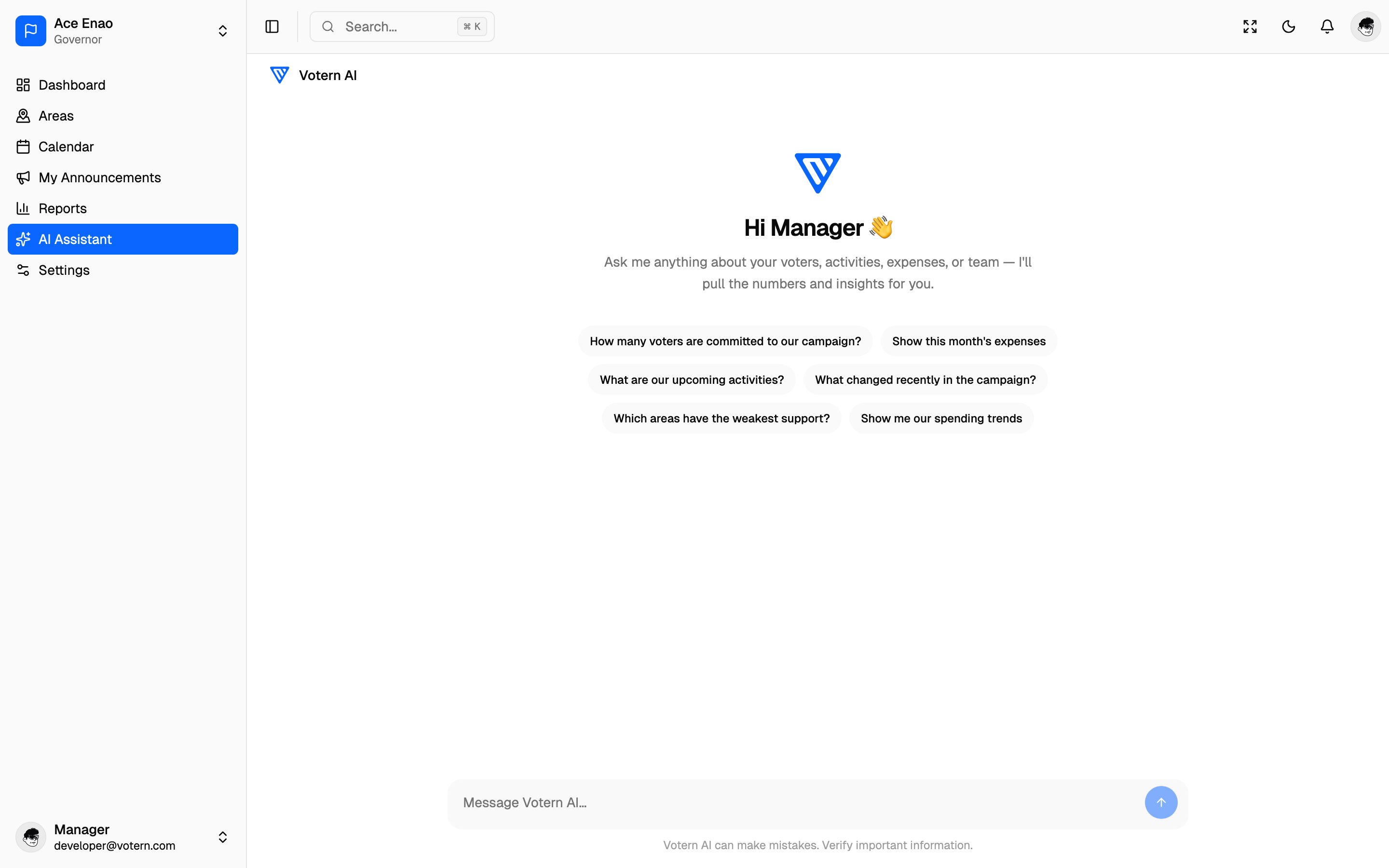
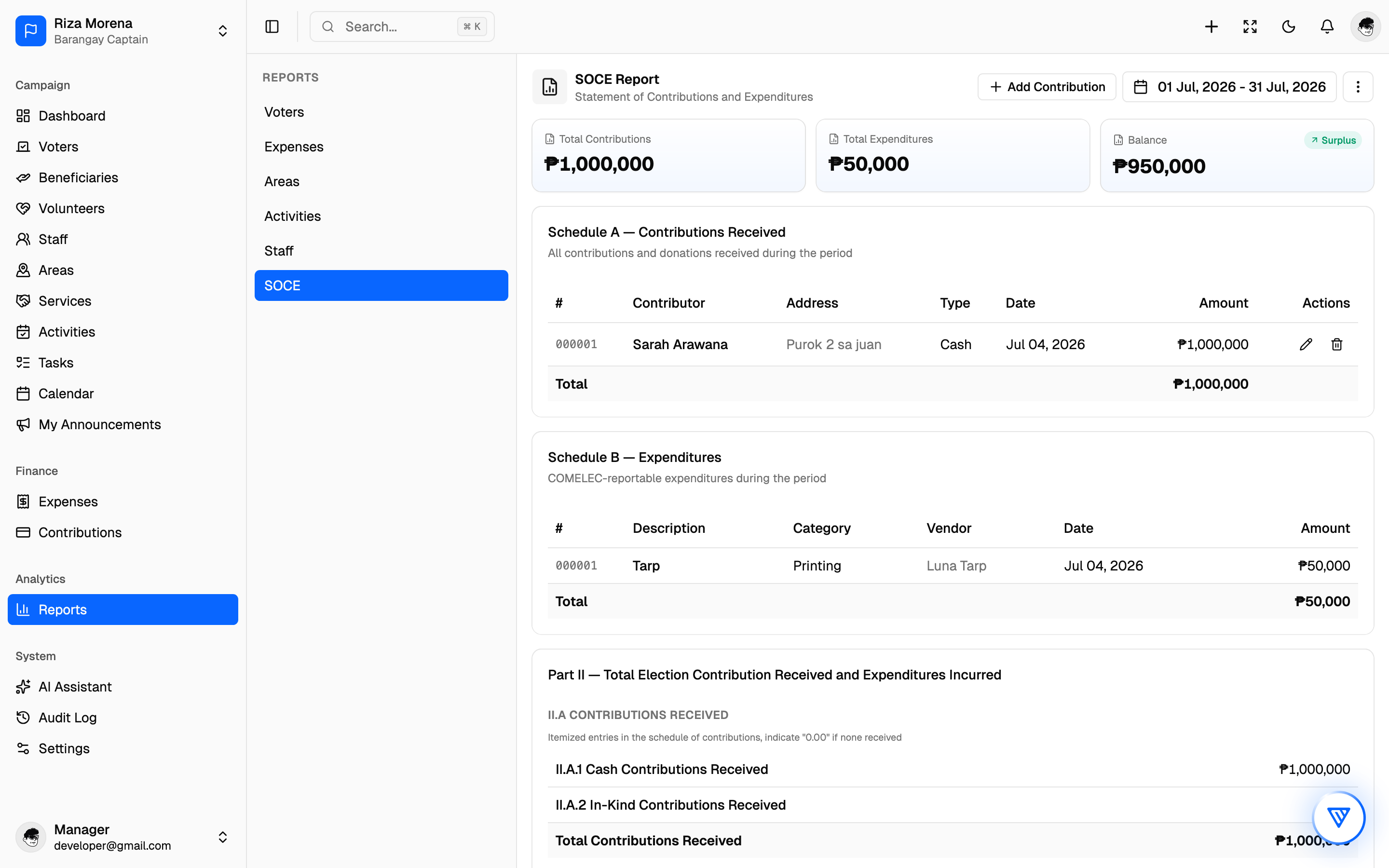
- •AI-assisted reporting for compliance and strategy reviews
- •Role-based access for staff, coordinators, and admins
Deployment Process
Push / PR
GitHub
Run tests
CI test suite
Build image
Buildx · linux/amd64
Push image
Registry
Run migrations
Drizzle Kit
Trigger deploy
Dokploy webhook
Live app
Challenges & Solutions
Problem
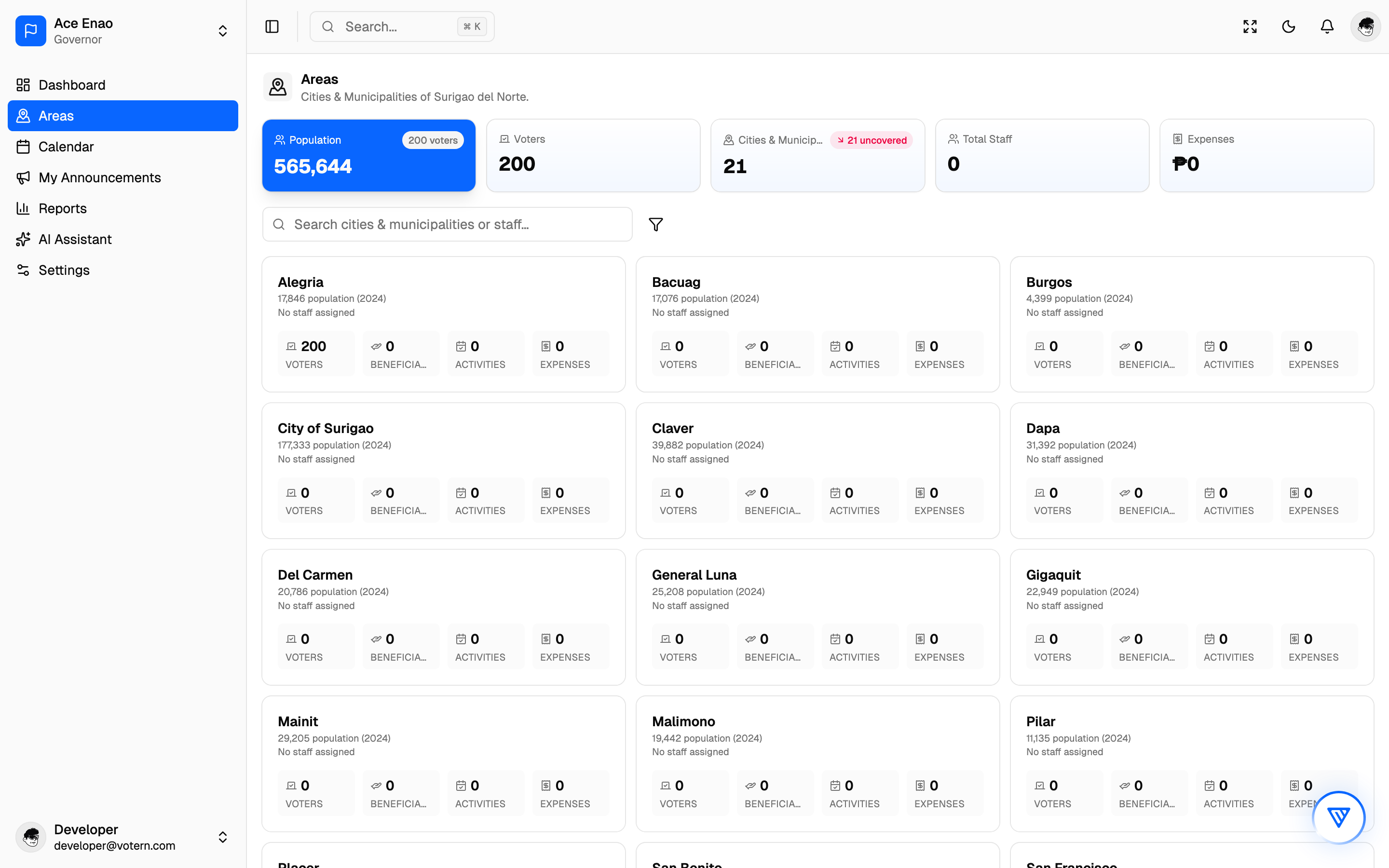
The Areas page rolled up data across the full PSGC hierarchy (~42,010 barangays / ~43,768 nodes). Every request performed an access-scope tree walk and multiple unindexed GROUP BY queries, causing PostgreSQL CPU usage to spike to ~800% during repeated refreshes.
A materialized view didn't solve the issue because it required refreshing the entire dataset, making it inefficient for a multi-tenant system.
Solution
Replaced the live fan-out and materialized view with Redis caching + targeted invalidation in front of a single recursive CTE query:
- •Cached area metrics per organization, PSGC scope, and metric.
- •Cached member access scopes and PSGC descendants separately.
- •Invalidated only affected geographic ancestors instead of the entire organization.
- •Used BullMQ to proactively warm caches hourly.
- •Added manual refresh and post-deploy cache warming.
- •Added DB fallback when Redis is unavailable.
ResultRepeated requests now hit warm Redis caches instead of rebuilding the 42k-node tree, eliminating the PostgreSQL CPU spikes and keeping the Areas page consistently fast.
Gallery